
Have you ever woken up wondering whether you kept your partner awake last night? You’re not alone. Millions of people snore—and many never realize they’re doing it.
Snoring is one of the most common sleep-related behaviors, yet it’s often poorly understood. Although occasional snoring is common, factors such as sleep position, nasal congestion, alcohol, and individual anatomy can all influence how often and how loudly you snore. Understanding these factors is the first step toward improving your sleep—and the sleep of anyone sharing your bedroom.
What Causes Snoring?
When you fall asleep, the muscles in your throat naturally relax. As air passes through your airway, these relaxed tissues vibrate, creating the familiar sound of snoring.
How loud that sound becomes depends on how narrow your airway is and how easily air flows through it. That’s why snoring can range from a soft, occasional sound to something loud enough to disturb everyone in the room.
What Can Make Snoring Worse?
Several everyday factors can increase the likelihood of snoring or make it more noticeable:
- Sleeping on your back – Gravity can cause your tongue and the soft tissues in your throat to fall backward, narrowing the airway.
- Nasal congestion – A cold, allergies, or a blocked nose can make breathing through your nose more difficult, increasing the likelihood of snoring.
- Alcohol before bed – Alcohol relaxes the muscles in your throat, which can make snoring more likely.
- Poor or insufficient sleep – Being overtired may contribute to snoring in some people by affecting muscle tone during sleep.
- Individual anatomy – The shape of your airway, jaw, nose, and throat naturally varies from person to person, influencing how likely you are to snore.
Because these factors can change from day to day, your snoring may not be the same every night.
Why Tracking Your Snoring Matters
One of the biggest challenges with snoring is that it happens while you’re asleep. Most people have little idea how often they snore, whether it’s getting worse, or what might be contributing to it.
Tracking your snoring over time can reveal patterns that are difficult to notice otherwise:
- Do you snore more when sleeping on your back?
- Does alcohol or a late night make a difference?
- Are seasonal allergies affecting your sleep?
- Does your snoring change from week to week?
Understanding these patterns can help you make informed lifestyle changes and see whether they’re actually improving your sleep.
When Should You Talk to a Doctor?
Occasional snoring is common and is not necessarily a cause for concern.
However, if your snoring is frequent, very loud, or accompanied by pauses in breathing, gasping during sleep, morning headaches, or excessive daytime sleepiness, it’s a good idea to speak with a healthcare professional. These symptoms can sometimes be associated with obstructive sleep apnea, a condition that requires medical evaluation and treatment.
How Technology Can Help
Since you can’t observe your own sleep, technology can help fill in the gaps.
Sleep tracking apps can help you monitor your snoring over time, making it easier to identify patterns and understand how lifestyle changes affect your sleep. Instead of relying on guesswork, you can build a clearer picture of what happens each night.
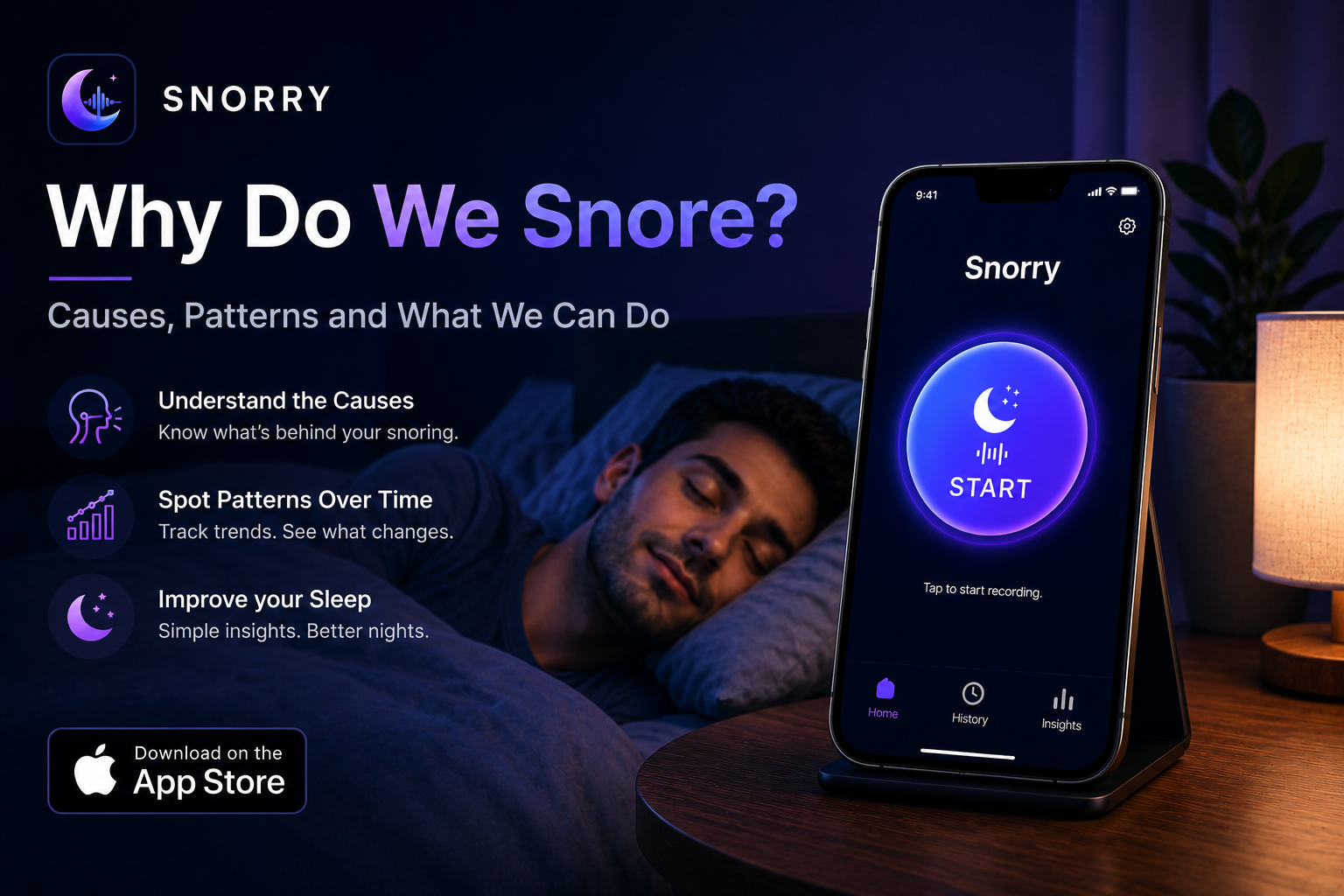
Snorry is designed to do exactly that. It runs quietly in the background while you sleep, helping you track your snoring over time, review previous sleep sessions, and identify trends. Gentle position alerts can also help you become more aware of sleeping habits that may influence your snoring—all directly on your iPhone.
Start with Awareness
Snoring isn’t always the same from one night to the next. By tracking it over time, you can better understand how factors like sleep position, congestion, or alcohol may affect your sleep and make more informed decisions about changes that might help.
Curious about what happens after you fall asleep? Download Snorry and start tracking tonight.
Leave a Reply